

Arizona Pickleball Court Coating Guide
Choosing the Best contractor for pickleball court coating in Arizona starts with understanding what makes desert courts different: extreme heat, intense UV exposure, abrasive dust, and sudden monsoon moisture all place unusual stress on outdoor sports surfaces.
A pickleball court in Arizona cannot be treated like a standard painted slab. The coating system has to manage expansion, surface temperature, traction, drainage, and long-term color stability. For homeowners, HOAs, schools, clubs, and recreation departments, the right approach can mean years of consistent play instead of premature fading, cracking, peeling, or unsafe slick spots.
That is why the contractor selection process matters. A qualified sports surface professional will look beyond color and striping. They will evaluate the base, repair movement cracks, recommend the right acrylic system, and finish the court so it plays well in real Arizona conditions—not just on installation day.
What the Best contractor for pickleball court coating in Arizona Should Know About Desert Conditions
Arizona’s climate is beautiful for outdoor sports, but it is tough on court surfaces. Summer heat can push pavement temperatures far above the air temperature, while UV exposure slowly breaks down low-quality coatings. Add dust, hard water, irrigation overspray, and seasonal monsoon storms, and a poorly prepared court can age quickly.
A professional contractor should understand how each of these factors affects the court:
UV exposure: Causes fading, chalking, and surface brittleness when inferior coatings are used.
Thermal expansion: Asphalt and concrete expand and contract throughout the day, which can reopen cracks.
Moisture vapor: Concrete slabs can trap vapor that pushes upward, creating blisters under non-breathable coatings.
Dust and grit: Fine desert debris can reduce traction and wear down the surface faster.
Drainage issues: Standing water after storms can stain coatings and weaken repairs.
For outdoor pickleball courts, 100% acrylic coating systems are typically preferred because they are breathable, durable, and designed for athletic play. They allow some vapor movement while still creating a consistent textured surface for ball bounce and player traction.
Ace Coatings AZ Pro approaches Arizona court projects with this climate-specific mindset, especially when evaluating whether a surface needs simple recoating, full resurfacing, crack repair, or a more advanced cushion system.
How the Best contractor for pickleball court coating in Arizona evaluates the existing surface
Before coating begins, the existing slab or asphalt pad should be inspected carefully. A good contractor will not simply clean the surface and apply color. They will identify the conditions that could shorten the life of the finished court.
Important inspection points include:
Existing cracks and whether they are structural or surface-level
Low spots where water collects
Previous coatings that may be peeling or failing
Oil, rust, calcium, or irrigation stains
Surface roughness and porosity
Slope and drainage direction
Fence, net post, and edge conditions
This evaluation matters because coating does not fix every underlying problem. If cracks are moving, they need flexible repair materials. If the court holds water, resurfacing alone may not solve the drainage issue. If old coatings are poorly bonded, new layers may fail unless the surface is properly prepared.
A reliable contractor will explain these findings clearly before recommending a system. That transparency is part of good workmanship and helps property owners make informed decisions.
Materials the Best contractor for pickleball court coating in Arizona Should Recommend
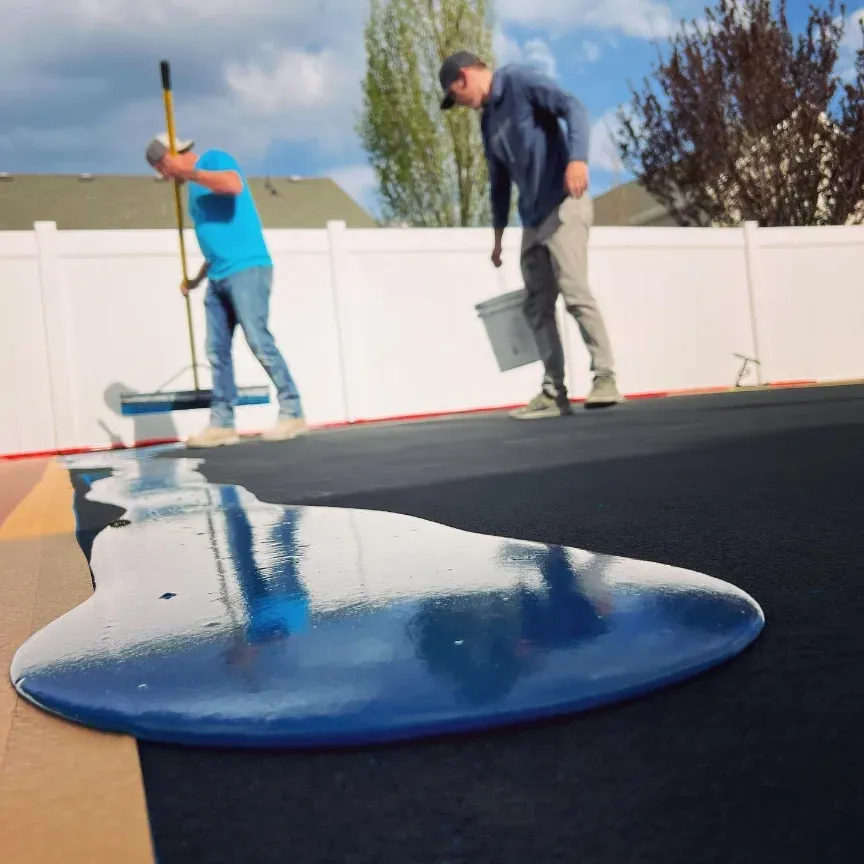
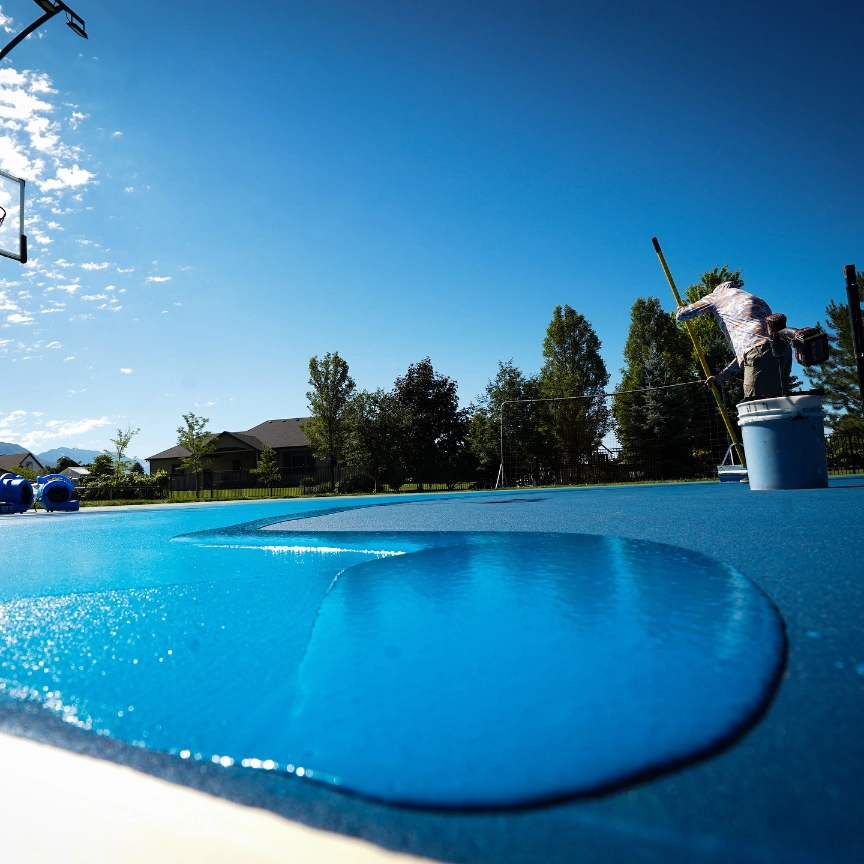
For most outdoor Arizona courts, acrylic sports surfacing is the practical standard. It provides a balance of durability, playability, UV resistance, and breathability. The coating system usually includes a resurfacer layer, color coats, textured sand, and precision striping.
A typical professional resurfacing process includes:
Cleaning and surface preparation
Dirt, dust, loose coatings, and contaminants must be removed so new materials can bond properly.Crack repair and patching
Cracks are cleaned and filled using sport-surface repair products. Larger cracks may require fabric reinforcement or specialized patching.Acrylic resurfacing application
This layer helps smooth the surface, fill minor voids, and create a consistent base for color coating.Color coating system
Multiple coats of UV-resistant acrylic color are applied with controlled texture for grip and ball response.Court striping
Lines are measured and painted to regulation dimensions. For pickleball, accurate layout is essential because the non-volley zone, baselines, sidelines, and service courts directly affect play.
The finished court should offer grip without feeling abrasive, consistent bounce without dead spots, and clear lines without visual clutter. If the surface will be used for both tennis and pickleball, line color selection becomes even more important.
Why the Best contractor for pickleball court coating in Arizona may suggest cooler court colors
Court color is not only an aesthetic decision in Arizona. Dark surfaces absorb more heat, which can make summer play uncomfortable and increase surface stress. Lighter or solar-reflective colors can help reduce heat absorption and improve player comfort.
Popular options for hot climates include:
Light blue
Medium blue
Soft green
Sand or beige tones
Light gray accent areas
Color contrast should still be strong enough for players to track the ball and read the lines quickly. For pickleball, this is especially important because rallies are fast, and players spend a lot of time near the kitchen line.
For higher-comfort projects, some owners also consider cushion court systems. These use layers of rubberized acrylic material beneath the color coats to reduce impact on knees, hips, ankles, and lower backs. Cushion systems cost more, but they can be valuable for private clubs, active adult communities, and residential courts where players spend long sessions on the surface.
Ace Coatings AZ Pro can help compare standard acrylic resurfacing with cushioned options based on budget, player expectations, and how often the court will be used.
How to Choose the Best contractor for pickleball court coating in Arizona With Confidence
The best contractor is not necessarily the lowest bidder. Sports surfacing is a specialized trade, and pickleball courts require more precision than general concrete painting or decorative coating work.
When comparing contractors, ask specific questions:
Do you specialize in sports court coatings?
What coating system do you recommend for Arizona heat and why?
How do you repair cracks before resurfacing?
How many coats are included?
What texture level will be used for pickleball play?
How will you handle drainage or low spots?
Can you provide examples of recent Arizona court projects?
What maintenance does the finished surface require?
What warranty is included, and what voids it?
A professional should be able to explain the difference between athletic acrylic coatings and ordinary paint. They should also understand official court layout standards, including net height, non-volley zone placement, and line dimensions. The phrase USA Pickleball should not be used as decoration; it should reflect awareness that accurate court dimensions and playability standards matter.
Pricing varies depending on the court condition, size, crack repair needs, coating system, and whether cushion layers are included. A straightforward resurfacing project may be far less expensive than a court with structural cracking, drainage issues, or failed previous coatings. The estimate should clearly describe the preparation, materials, number of coats, striping, and any exclusions.
Maintenance advice from the Best contractor for pickleball court coating in Arizona
A good coating job should come with practical maintenance guidance. Arizona courts collect dust quickly, and that dust can make the surface slippery or abrasive if ignored.
Routine maintenance should include:
Blowing or sweeping the court regularly
Rinsing dust and debris with clean water when needed
Avoiding harsh chemicals and pressure-washer damage
Keeping irrigation spray off the court
Removing leaves, seed pods, and organic debris
Checking cracks and low spots after storms
Scheduling professional inspections before small issues grow
Homeowners and facility managers can handle basic cleaning, but repairs and recoating should be left to sports surface professionals. Using the wrong patch material or coating product can create bonding problems and shorten the life of the court.
Ace Coatings AZ Pro helps property owners plan both the installation and the long-term care strategy, which is especially important in a climate where surfaces are exposed to heat and sun almost every day of the year.
A well-coated pickleball court should feel safe, look sharp, and play consistently. In Arizona, that requires the right materials, careful preparation, and a contractor who understands desert performance—not just surface appearance.
A properly finished court can support casual family games, competitive league play, HOA recreation, school programs, or club use. The key is choosing a professional who treats the project as an athletic surface system from the start.
Contact
Contact us at Ace Coatings AZ Pro to discuss pickleball court coating, resurfacing, repair, striping, or multi-use court planning in Arizona.
