


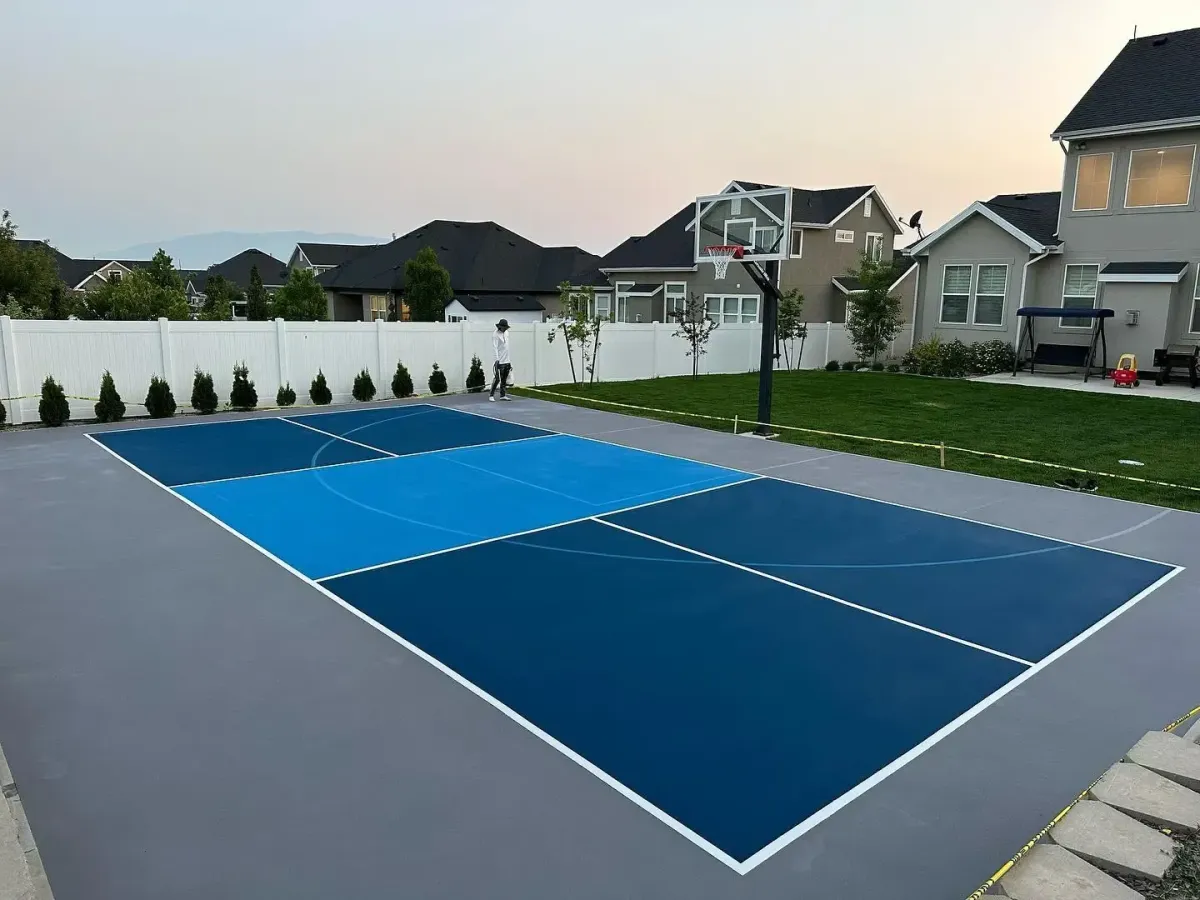
Convert Basketball to Pickleball Court in Arizona
That unused backyard slab doesn’t have to sit idle under the Arizona sun. Many homeowners are discovering that a Convert a Basketball Court into a Pickleball Court project can completely transform how their outdoor space is used. With pickleball’s rapid growth across the state, repurposing an existing surface is one of the most practical ways to create a high-value recreational feature at home.
However, Arizona’s extreme heat introduces challenges that go far beyond repainting lines. Surfaces can blister, coatings can fade, and poorly prepared concrete can crack under intense thermal stress. Experienced contractors, including teams like Ace Coatings AZ Pro, emphasize that success comes from combining proper surface preparation with climate-adapted materials. When done correctly, your upgraded space becomes a durable, year-round play area rather than a short-lived experiment.
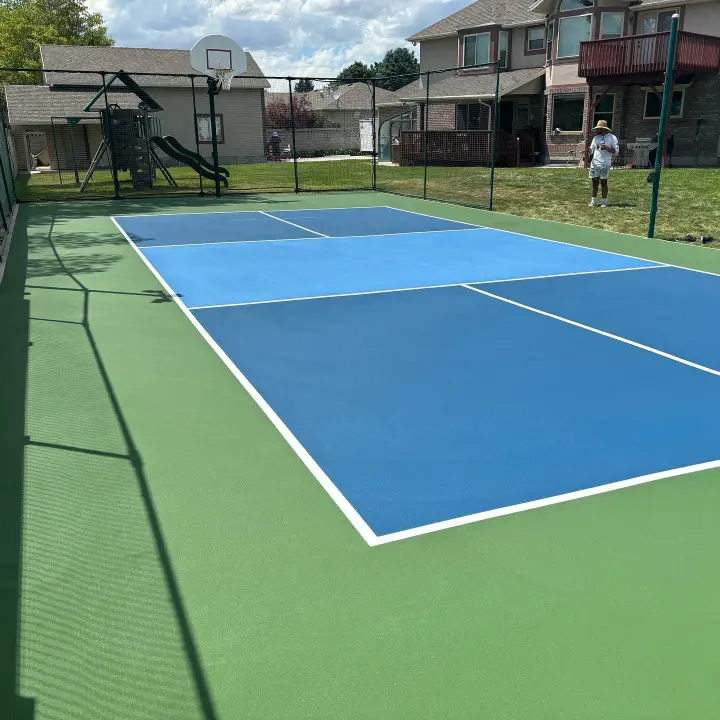
Planning Layouts to Convert a Basketball Court into a Pickleball Court
Before any physical work begins, understanding how to maximize your existing slab is essential. A well-planned layout ensures both functionality and long-term usability.
Smart Space Design When You Convert a Basketball Court into a Pickleball Court
A standard basketball surface (50' x 94') provides more than enough room to accommodate multiple pickleball layouts. By rotating the orientation, you can fit up to three courts while maintaining safe spacing.
Key layout considerations include:
Orientation: Align courts north-to-south to reduce glare from sunrise and sunset
Spacing: Allow adequate clearance around each court for safe movement
Line visibility: Use contrasting colors to distinguish boundaries clearly
Understanding official dimensions is critical. A standard pickleball playing area measures 20' x 44', including the non-volley zone (the “kitchen”), which extends 7 feet from the net on each side.
If you want to preserve flexibility for other activities, consider using layered line systems with distinct colors. Professionals at Ace Coatings AZ Pro often recommend this approach for homeowners who want versatility without sacrificing clarity during play.
Surface Preparation to Convert a Basketball Court into a Pickleball Court
Arizona’s climate demands a strong foundation. Without proper preparation, even high-quality coatings will fail prematurely.
Repair and Prep Steps to Convert a Basketball Court into a Pickleball Court
Concrete naturally expands and contracts under extreme heat. Over time, small cracks can widen and compromise the entire surface. Addressing these issues early is essential.
Effective preparation includes:
Filling cracks with flexible acrylic compounds
Cleaning and degreasing the surface thoroughly
Mechanically or chemically etching the concrete for better adhesion
This process allows coatings to bond securely rather than peel under heat exposure. Skipping these steps often leads to bubbling or flaking within a single season.
Another key factor is using materials designed specifically for high-temperature environments. Standard paints are not sufficient. Instead, specialized acrylic systems provide elasticity and durability, allowing the surface to “move” with temperature changes.
Choosing Materials to Convert a Basketball Court into a Pickleball Court
Once the surface is properly prepared, selecting the right materials determines how well your court performs over time.
Heat-Resistant Options to Convert a Basketball Court into a Pickleball Court
Arizona’s intense sunlight requires coatings that reflect heat rather than absorb it. This is where Solar Reflective Index (SRI) becomes important. High-SRI coatings can significantly reduce surface temperatures, improving comfort and extending lifespan.
Recommended material strategies:
Light-colored coatings for primary play areas to reduce heat buildup
UV-resistant pigments to prevent fading
Textured finishes with silica sand for slip resistance
These features not only improve durability but also enhance player safety, especially during sudden weather changes like monsoon rains.
For net systems, you’ll need to decide between permanent and portable options. Permanent systems offer stability and precision, while portable systems provide flexibility and easier installation.
To ensure proper setup, follow standards outlined by USA Pickleball, particularly for net height and court markings. This guarantees a consistent playing experience whether recreational or competitive.
Contractors such as Ace Coatings AZ Pro often guide homeowners through these decisions, balancing performance, cost, and long-term maintenance.
Final Thoughts: From Empty Slab to Active Space
Transforming an underused basketball surface into a pickleball-ready area is one of the most efficient upgrades a homeowner can make in Arizona. With the right approach, the project can typically be completed within a couple of weeks, depending on weather and surface conditions.
A simple process keeps everything on track:
Deep cleaning
Crack repair
Surface coating
Line application
Net installation
Ongoing care is just as important. Regular sweeping, occasional washing, and periodic inspections will help maintain performance despite harsh sun exposure.
When approached with the right expertise and materials, this conversion becomes more than a surface upgrade—it turns your backyard into a consistent, reliable place to play.
Contact Us
Thinking about making the switch from hoops to pickleball? This is where the exciting part begins. Whether you’re still exploring ideas or ready to move forward, Ace Coatings AZ Pro is here to help you turn that vision into something you can actually step onto and enjoy.
You don’t need to have everything figured out—that’s what the conversation is for. From layout ideas to surface options that can handle Arizona’s heat, you’ll get clear answers and practical direction based on real project experience. No pressure, just solid guidance to help you move forward with confidence.
Want to know what your space could look like? Curious about timelines or costs? Let’s talk through it and map out your next steps.
