


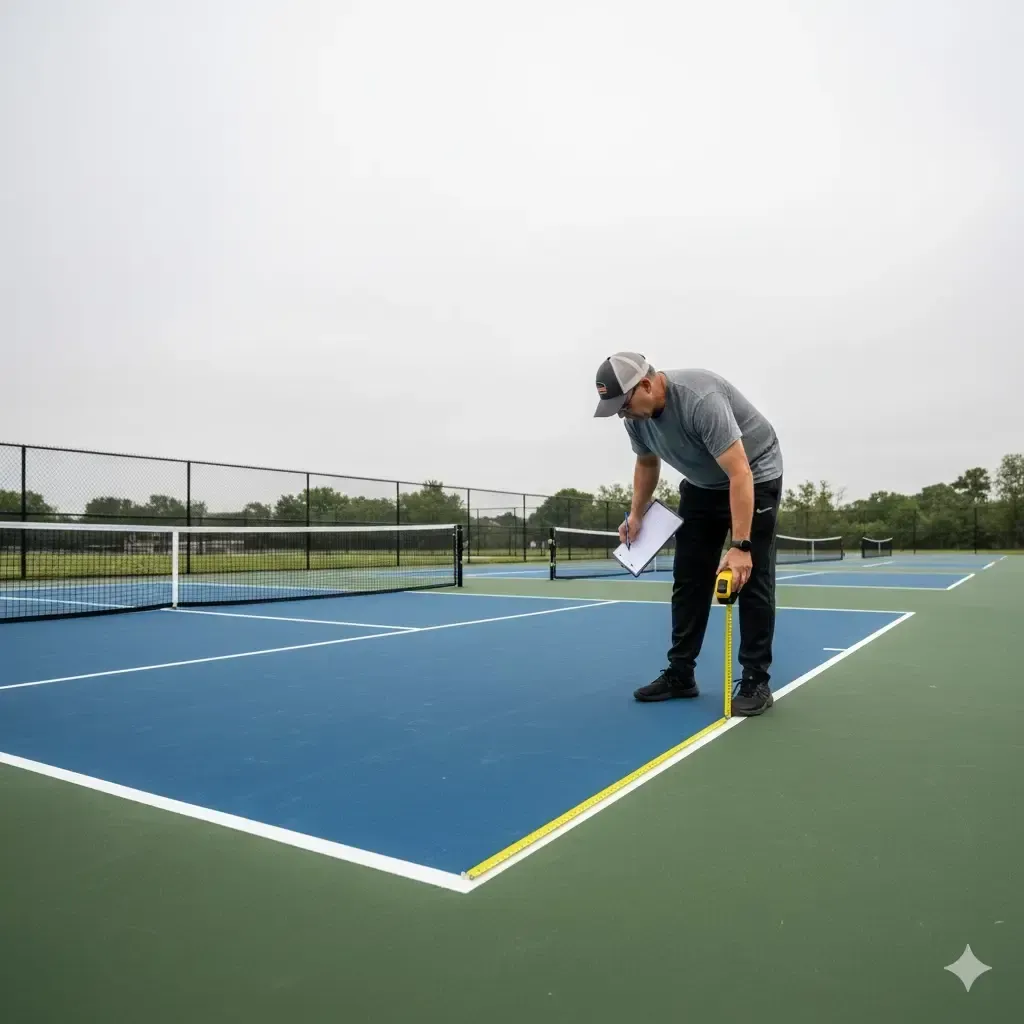
Multiple Pickleball Court Layout: Design, Spacing, and Standards
Have you ever played on a court where you felt boxed in, constantly worried about running into a fence or colliding with players from the next game? That frustration isn’t caused by the players—it’s caused by poor planning. A Multiple Pickleball Court Layout is one of the most important decisions when designing a new facility, yet it’s often misunderstood or rushed.
Creating a successful layout goes far beyond painting lines on asphalt or concrete. It’s about safety, player comfort, long-term usability, and maximizing your space without sacrificing the quality of play. When layouts are designed incorrectly, the result is unhappy players, increased injury risk, and costly corrections later. This guide breaks down the standards, spacing requirements, and real-world considerations you need to get it right the first time.

Multiple Pickleball Court Layout Basics Every Project Must Follow
Before planning multiple courts, it’s essential to understand the core dimensions that every pickleball court is built on. These measurements are non-negotiable and form the foundation of every successful layout.
Multiple Pickleball Court Layout Starts With Correct Court Dimensions
Every regulation pickleball court measures 20 feet wide by 44 feet long, measured to the outside edge of the lines. These dimensions are universal across recreational, club, and tournament play. Inside the court is the non-volley zone, commonly called “the kitchen,” which extends seven feet from the net on both sides.
Understanding these dimensions ensures that each court functions correctly on its own before being combined into a larger complex. Contractors with extensive experience, such as Ace Coatings AZ Pro, stress that accurate base measurements are the first step toward preventing layout issues later.
Multiple Pickleball Court Layout Requires Total Playing Area Planning
While the official court size is 20 by 44 feet, that space alone is not enough for safe play. Players routinely chase balls beyond the baseline and sideline, which is why every court must include a surrounding safety buffer known as the Total Playing Area (TPA).
Industry standards recommend three levels of TPA:
Minimum: 30 feet by 60 feet for tight recreational spaces
Recommended: 34 feet by 64 feet for most public and club facilities
Tournament: 40 feet by 70 feet for competitive play
Designs that follow guidance aligned with USA Pickleball standards consistently produce safer and more enjoyable courts.
Spacing Between Courts
Once you establish the Total Playing Area for a single court, the next challenge is positioning multiple courts together without creating congestion or safety risks.
Side-by-Side Spacing Rules
A common mistake is placing courts too close together. Best practice calls for 12 feet of clear space between adjacent sidelines when courts are placed side by side. This shared space allows players from both courts to pursue shots without colliding.
Using the recommended 34-foot-wide Total Playing Area, this spacing ensures players have room to move while maintaining an efficient footprint. Professionals like Ace Coatings AZ Pro frequently design layouts that balance safety with space efficiency, especially for parks and community facilities.
Net and Post Placement
That 12-foot inter-court space also provides a safe location for net posts, fence poles, or divider systems. Placing posts too close to the playing area increases injury risk and interferes with play. Proper spacing keeps fixed objects at least six feet from each sideline, protecting players during aggressive rallies.
Multiple Pickleball Court Layout for Conversions and Orientation
Many communities look to convert underused tennis courts or multipurpose spaces into pickleball facilities. These conversions can be highly efficient when designed correctly.
Tennis Court Footprint
A standard tennis court measures 60 feet wide by 120 feet long, which allows for a clean conversion into four pickleball courts arranged in a two-by-two grid. This setup typically uses the minimum Total Playing Area of 30 by 60 feet per court, with approximately 10 feet of shared spacing between interior courts.
While this layout prioritizes capacity, it remains safe and functional for recreational play. Contractors such as Ace Coatings AZ Pro often recommend this approach when communities want to maximize participation without expanding their footprint.
Orientation and Environmental Factors
Court orientation is often overlooked but critically important. Whenever possible, courts should be aligned north to south. This prevents players from facing the rising or setting sun during matches, which can significantly affect visibility and fairness.
Fencing is another essential component. Perimeter fencing is typically 10 feet high to contain play, while interior divider fencing can range from 4 to 10 feet depending on budget, visibility preferences, and facility design goals.
Finishing Details That Elevate the Player Experience
Beyond court spacing, successful layouts account for walkways, drainage, and spectator areas. Walkways of at least 3 to 5 feet around the perimeter improve traffic flow and accessibility. Proper drainage ensures water sheds away from the playing surface, reducing puddles and surface damage.
Spectator seating should always be placed outside fenced areas to protect viewers and maintain clear boundaries for players. These finishing details transform a basic court setup into a true community destination.
Your Blueprint for a Successful Layout
A great pickleball facility starts with thoughtful planning. When you combine correct court dimensions, adequate spacing, proper orientation, and attention to surrounding features, the result is a layout that players enjoy and facilities can maintain long-term.
Working with experienced professionals who understand both construction and playability helps avoid costly mistakes.
Contact us at Ace Coatings AZ Pro to learn how expert planning and court construction can turn your multiple pickleball court layout into a safe, efficient, and enjoyable facility built to last.
