

Best Pickleball Court Color Combinations for Visibility & Style
Choosing the right pickleball court color combinations isn’t just about aesthetics—it directly impacts visibility, comfort, and overall gameplay. While a neutral or trendy color might look appealing at first glance, poor contrast can make it difficult to track the ball during fast rallies. A well-designed court balances style with function, ensuring players can clearly see the ball while enjoying a visually appealing space.
From a professional standpoint, experienced contractors like Ace Coatings AZ Pro emphasize that color selection is one of the most overlooked factors in court performance. The right palette improves reaction time, reduces eye strain, and even helps regulate surface temperature—making your court more enjoyable year-round.
Pickleball Court Color Combinations for Visibility and Performance
When it comes to performance, contrast is everything. The standard pickleball uses an “optic yellow” ball, which requires a darker or complementary background to remain visible during play.
How to Choose High-Contrast Court Colors
To improve reaction time and tracking:
Avoid light beige, tan, or pale yellow surfaces
Choose deep blues, greens, or cool-toned surfaces
Use contrasting tones between playing area and perimeter
Color theory plays a role here. Since yellow sits opposite purple on the color wheel, darker blue or violet-toned courts provide the best contrast. This is why many professional courts follow standards similar to those promoted by USA Pickleball.
A simple way to test your choice:
Place a pickleball on your color sample
Step back 15–20 feet
If the ball blends in, choose a darker shade
Professionals like Ace Coatings AZ Pro often guide homeowners through this process to ensure optimal playability before installation begins.
Best Pickleball Court Color Combinations for Style and Comfort
While visibility is critical, comfort—especially heat management—is just as important when selecting pickleball court color combinations.
Balancing Aesthetics with Surface Temperature
Darker colors absorb more heat, which can:
Increase surface temperature by 10–20°F
Cause faster fatigue during play
Affect ball bounce consistency
Lighter tones, on the other hand:
Reflect sunlight
Keep the surface cooler
Extend playable hours in warm climates
For homeowners in hotter regions like Arizona, Ace Coatings AZ Pro often recommends blending medium-tone inner courts with lighter outer areas to strike the perfect balance between performance and comfort.
Popular combinations include:
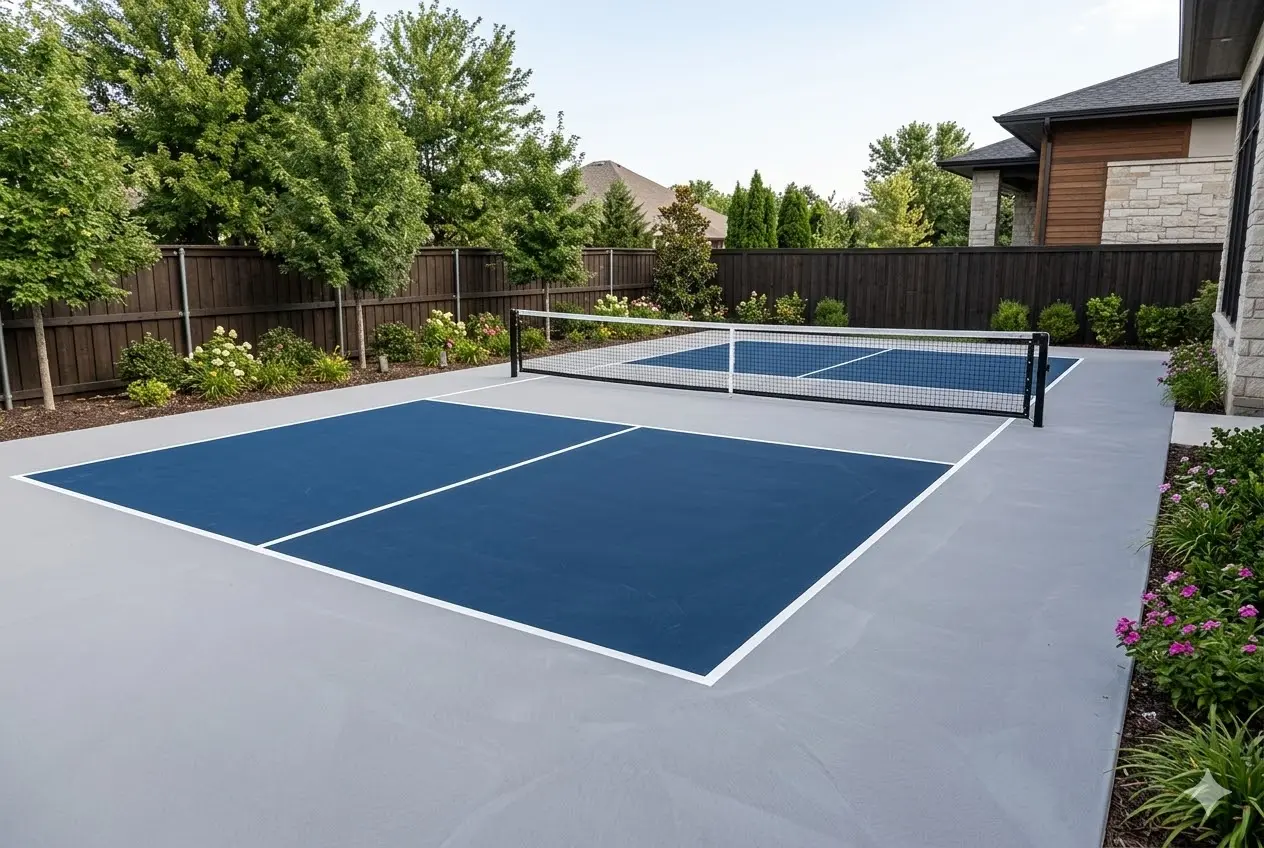
Tournament Blue (inner) + Light Blue (outer)
Dark Green (inner) + Red (outer)
Sky Blue (inner) + Grey (outer)
These combinations provide both visual clarity and temperature control.
Popular Pickleball Court Color Combinations for Residential Courts
For residential and community courts, a two-tone design remains the gold standard. It helps define boundaries while enhancing overall visual appeal.
Two-Tone Layout Ideas That Work
Here are some proven combinations:
Modern Look: Dark Blue inner with Light Grey outer
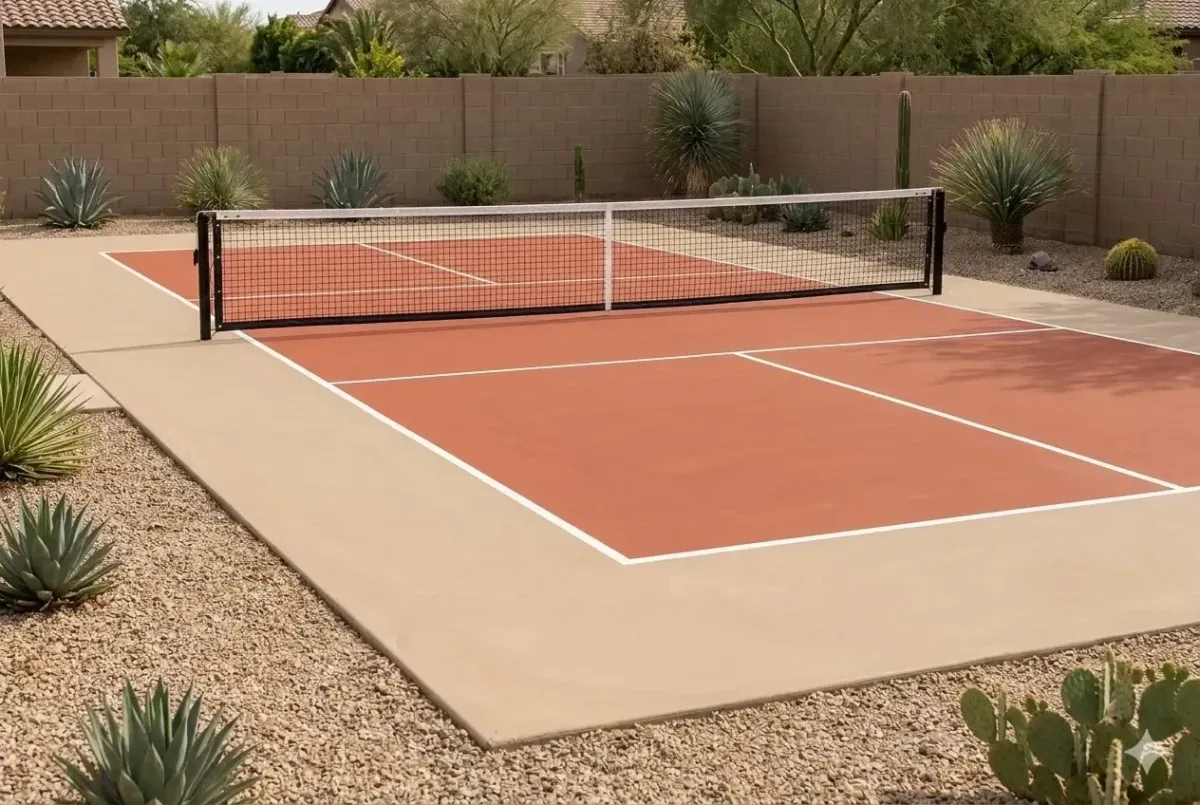
Desert Style: Terracotta inner with Beige outer
Coastal Theme: Sky Blue inner with Soft Grey outer
Classic Club Style: Green inner with Red outer
These layouts create a natural frame that helps players stay oriented during fast-paced games.
Another important design element is the non-volley zone (Kitchen). Using a slightly different shade for this area improves spatial awareness and reduces foot faults. Neutral tones like light grey or beige work well because they reduce glare while maintaining contrast.
Matching Your Court with Surroundings
Your court should complement your property—not clash with it. The outer perimeter (or apron) acts as a visual transition between the court and your landscape.
To achieve this:
Match perimeter tones with nearby elements (grass, fencing, or patio)
Avoid colors that blend too closely with the environment
Use neutral buffers like grey or muted green
For example:
Avoid dark green courts near dense trees (ball visibility drops)
Avoid beige courts in sandy environments
Avoid overly bright colors that cause visual fatigue
A well-balanced design ensures your court feels like a natural extension of your outdoor space.
Indoor vs Outdoor Considerations for Court Colors
Lighting conditions significantly impact how colors perform.
Indoor courts:
Require matte finishes to reduce glare from overhead lights
Outdoor courts:
Need UV-resistant coatings to prevent fading
Should use colors that maintain contrast under bright sunlight
High-quality coatings, like those applied by Ace Coatings AZ Pro, help preserve color vibrancy and durability even under harsh weather conditions.
Final Checklist for Choosing the Right Colors
Before finalizing your design, consider these key factors:
Visibility: Does the ball stand out clearly?
Temperature: Will the surface stay comfortable during peak heat?
Aesthetics: Does it match your home and surroundings?
Durability: Are you using UV-resistant materials?
Testing samples in real lighting conditions is always recommended. What looks good on a screen may appear very different outdoors.
Final Thoughts
The right color scheme does more than enhance appearance—it improves gameplay, comfort, and long-term satisfaction. By carefully selecting colors that balance contrast, temperature, and style, you create a court that performs as well as it looks.
With expert guidance from Ace Coatings AZ Pro, homeowners can confidently design courts that deliver both visual impact and professional-level play.
Contact us at Ace Coatings AZ Pro today to start planning your custom pickleball court.
